LAFD Responds to Storm-Related Flooding Across Los Angeles
A powerful storm system moved through Los Angeles on Thursday, November 19, bringing intense rainfall, rapidly rising waterways, flooded roadways, and debris flows. As conditions changed quickly throughout the morning, Los Angeles Fire Department (LAFD) personnel responded across the city, drawing on specialized rescue capabilities and extensive advance preparations to meet the growing demand for emergency services.
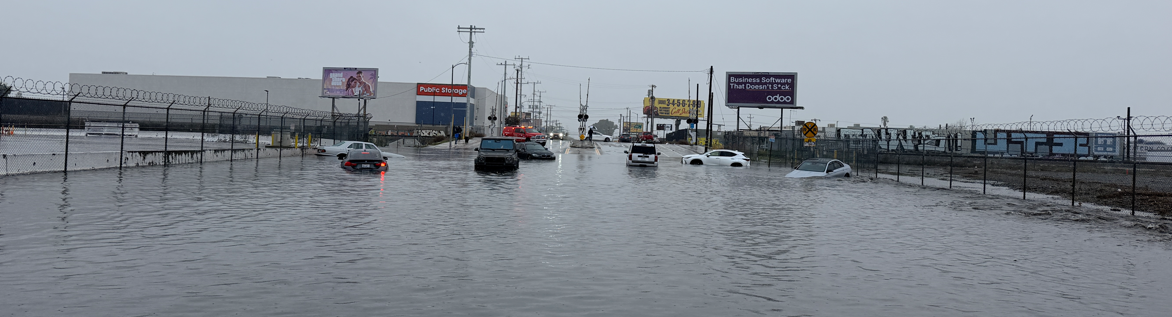
Roadways in the San Fernando Valley were hit particularly hard by the November 19 storm.
Photo: Adam Van Gerpen
The National Weather Service reported rainfall rates exceeding two inches per hour in parts of the San Fernando Valley, with a peak hourly rate of 2.26 inches near Encino Reservoir. Flash Flood Warnings were issued for portions of Los Angeles County, prompting urgent warnings about dangerous waterways, flooded streets, and potential debris flows. The City of Los Angeles Emergency Management Department (EMD) coordinated public preparedness messaging and emergency information, while evacuation warnings went into effect for communities near recent burn scars.
Recognizing the potential for rapidly changing conditions, the LAFD had taken steps ahead of the storm to strengthen its response capacity. Preparations included strategically positioning Swiftwater rescue teams, increasing available air support, placing dozer and heavy equipment teams on standby, and augmenting emergency dispatch staffing. These measures helped ensure specialized resources and personnel were ready to respond as incidents developed across Los Angeles. That preparation was put to the test early Thursday morning.
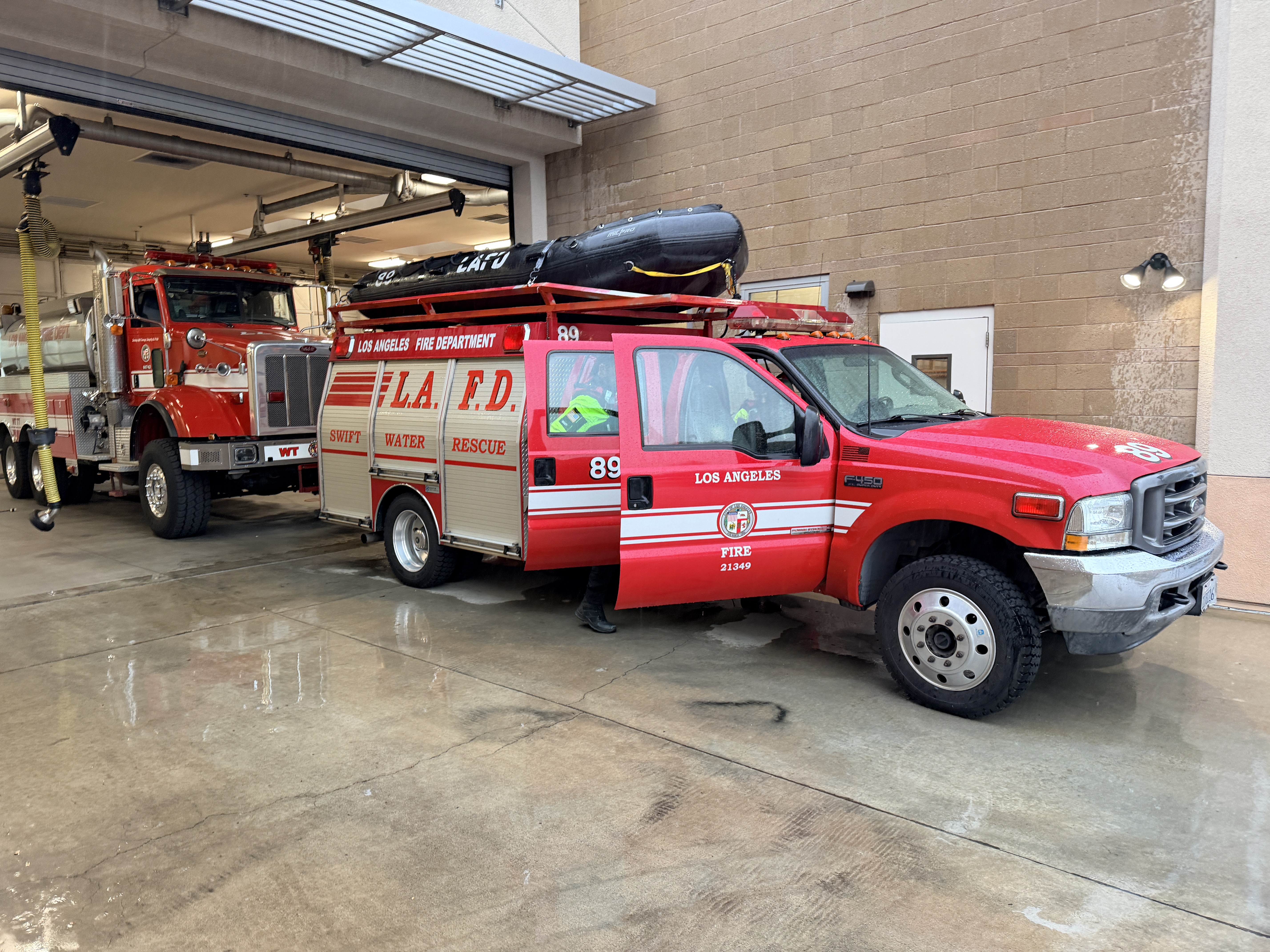
LAFD Swiftwater teams were among the additional resources pre-deployed for the storm
Photo: Adam Van Gerpen
At approximately 8:22 a.m., firefighters were dispatched to the Los Angeles River in the Sepulveda Basin, near Balboa Boulevard, where an adult woman was stranded on an island surrounded by rapidly rising water. LAFD Air Operations was notified but initially unable to fly because of severe weather conditions. Once conditions allowed aircraft to operate safely, Air Operations responded and successfully completed a short-haul rescue, lifting the woman to dry ground, supported by LAFD Swiftwater and fire crews. LAFD paramedics subsequently transported her to a local hospital. Air resources continued searching the area and confirmed no additional victims were visible from above.
Seven vehicles became stranded near Vineland Avenue and Vanowen Street
A full video transcript is available on YouTube.
Video: Adam Van Gerpen
Less than an hour later, another water rescue unfolded near Vineland Avenue and Vanowen Street, where seven vehicles became stranded in approximately 18 inches of fast-moving floodwater. LAFD Swiftwater personnel and neighborhood fire companies responded to assist. An elderly man trapped inside one of the vehicles was extricated and transported by ambulance to a local hospital. Three additional people were assisted out of the flooded area. Rescuers carefully worked their way through the moving water, using rubbish hooks to probe beneath the surface and check their footing before advancing through the submerged roadway. The coordinated effort brought all four people to safety.
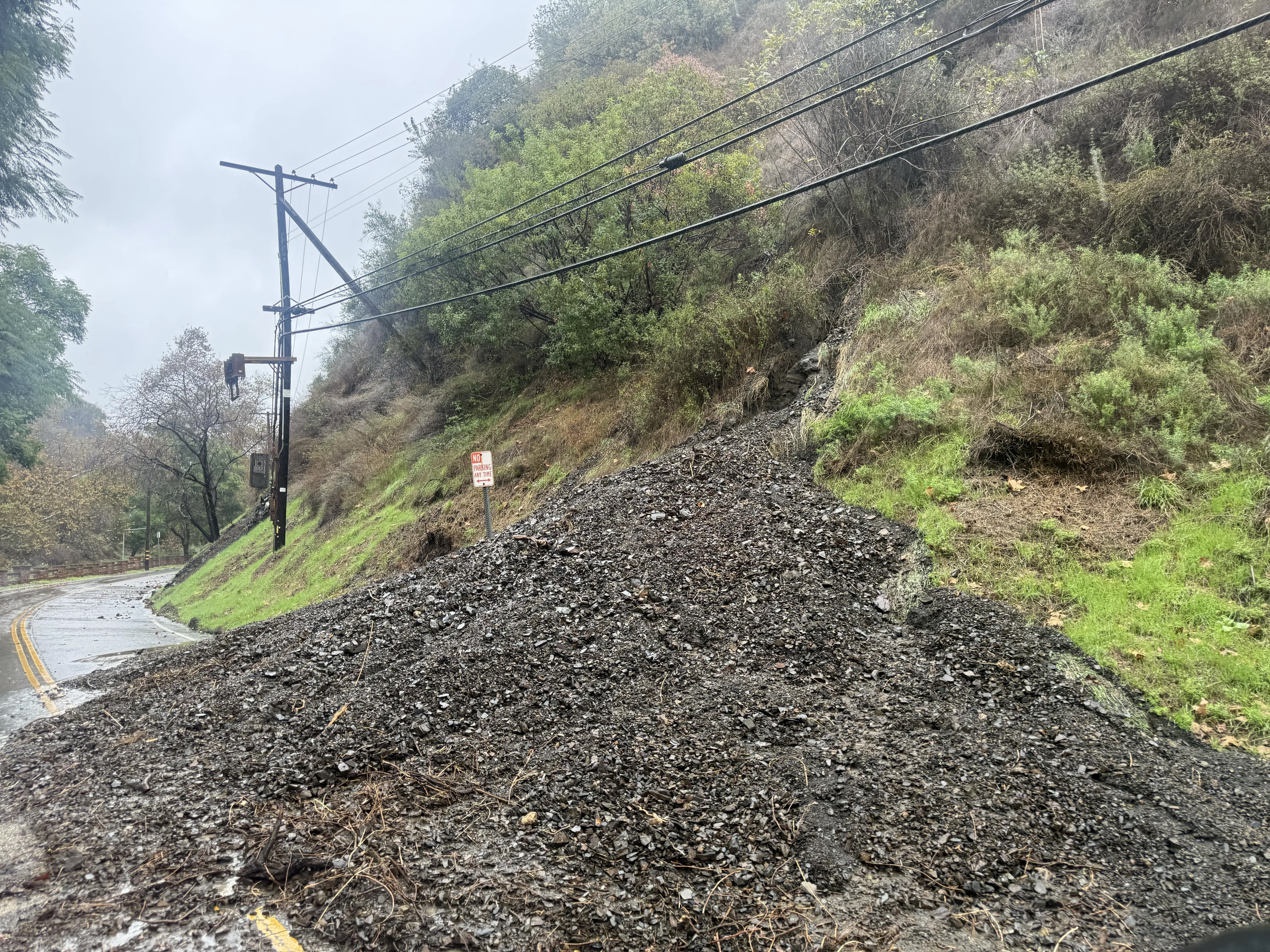
LAFD and LA Street Services coordinated to manage debris flows in Mandeville Canyon
Photo: Cody Weireter
In Mandeville Canyon, runoff carried mud and debris onto roadways, narrowing access through the canyon. LAFD personnel worked alongside Los Angeles Street Services to clear the roadway and assist residents navigating the affected area. The response demonstrated another important aspect of storm operations: addressing not only immediate threats to life, but also helping communities maintain access and recover from hazardous conditions.
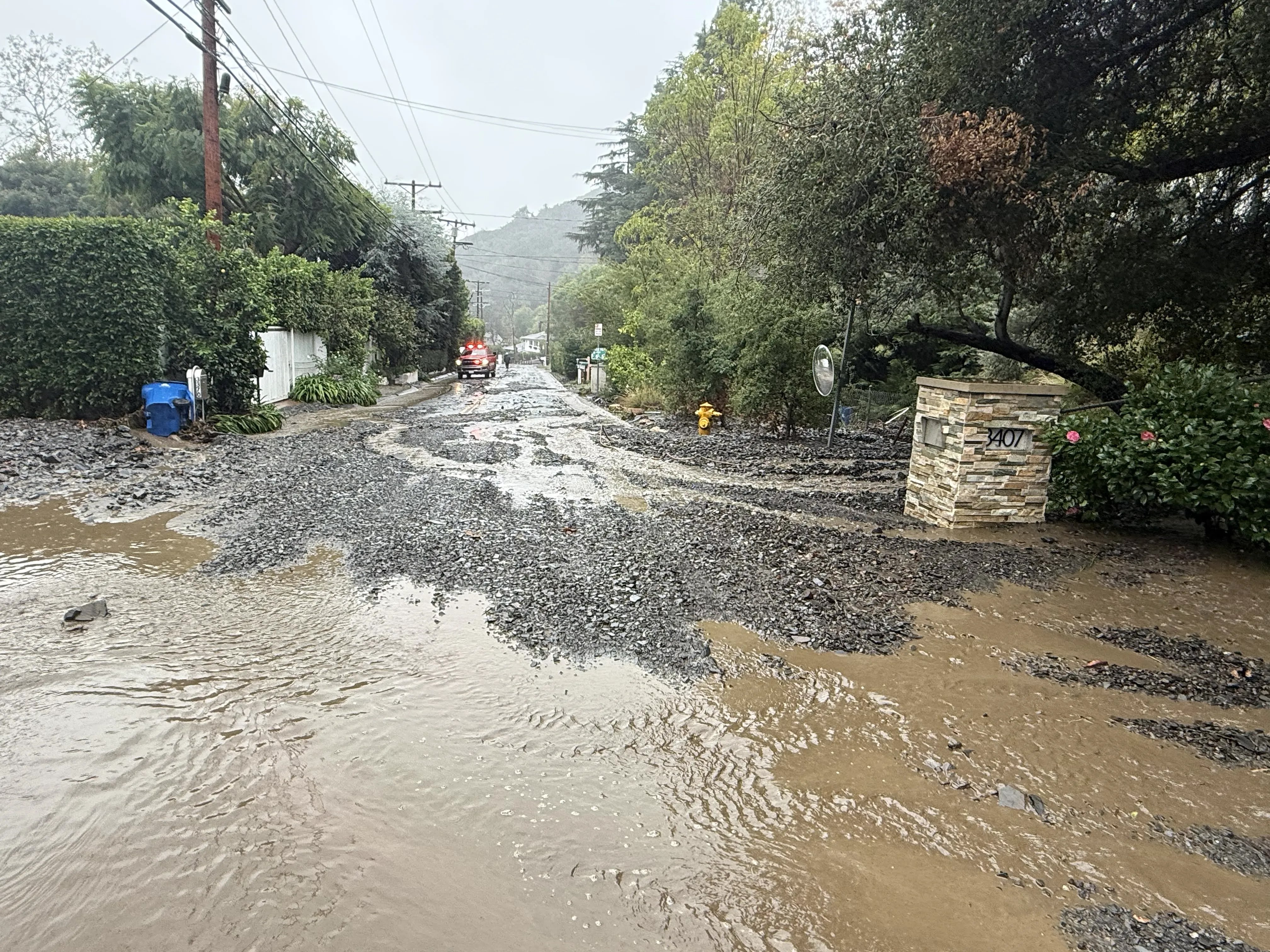
The 3400 to 3700 blocks of Mandeville Canyon experienced significant flooding and debris flows
Photo: Cody Weireter
Across the city, these incidents were part of a much larger response. On November 19, the LAFD handled 1,571 calls for service, compared with a year-to-date daily average of approximately 1,350. Among those calls, 31 were categorized as flooding incidents and six as river rescues, reflecting the increased demand created by the storm.
The response involved coordination among multiple City departments and public safety partners, including the Emergency Management Department, Los Angeles Police Department, Los Angeles Department of Transportation, Los Angeles Street Services, and the Department of Recreation and Parks. This interagency coordination, combined with the availability of specialized LAFD resources, helped address emergencies ranging from individual rescues to widespread roadway and drainage problems.
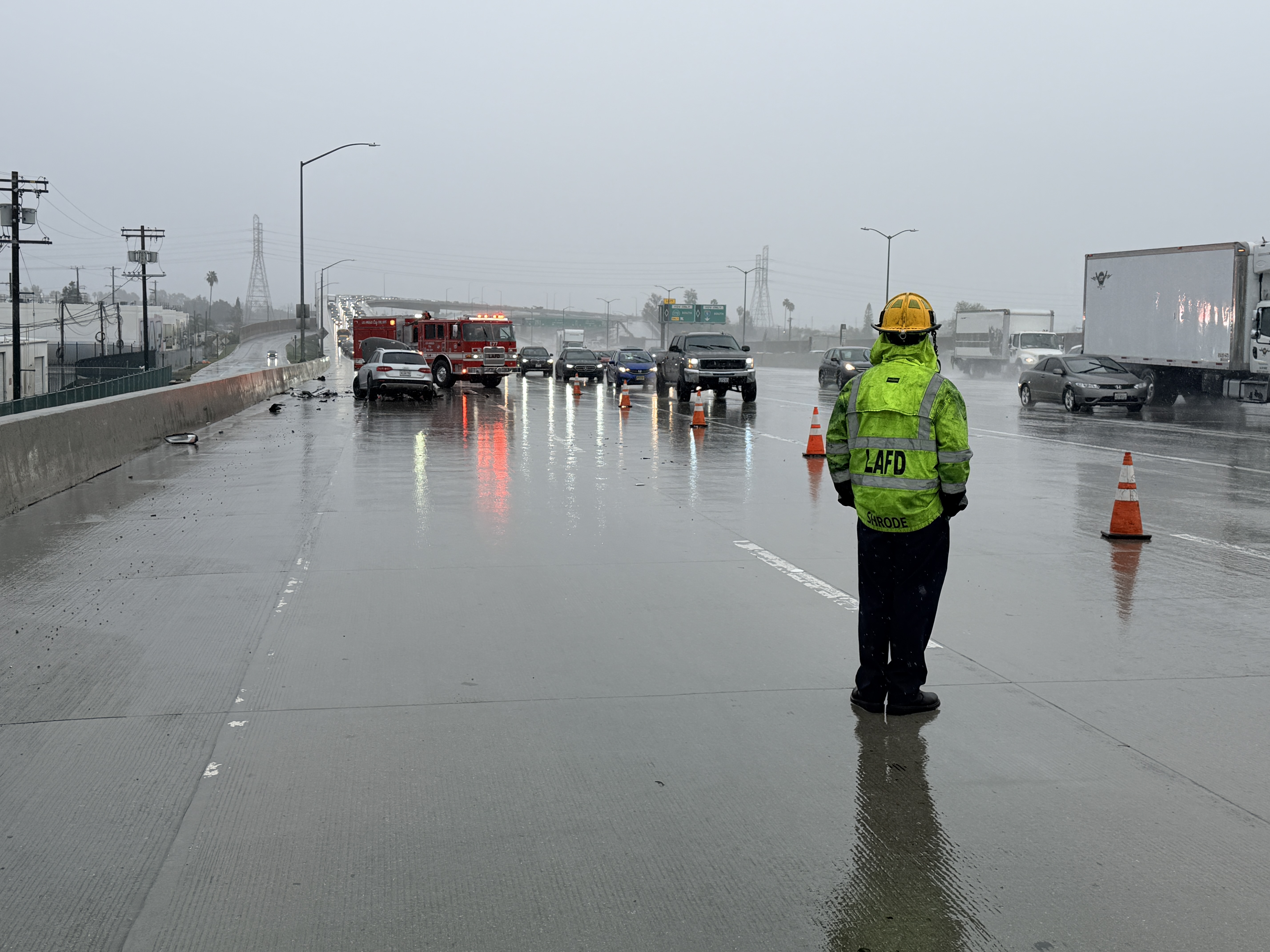
In addition to causing river rescue and flooding incidents, storms introduce visibility and road-condition hazards that tend to increase the number of traffic accidents
Photo: Adam Van Gerpen
By Thursday afternoon, as the storm's most significant impacts subsided and conditions improved, evacuation warnings for the Hurst, Sunset, and Palisades burn scar areas were lifted earlier than initially anticipated.
The day's operations offered a clear example of the importance of preparation, sound judgment, and coordinated response. While the most visible moments involved rescues from dangerous floodwaters, the work began well before the first emergency call and continued across neighborhoods throughout the city. From dispatchers managing an elevated call volume to firefighters, rescue specialists, pilots, and City partners working together in the field, the response reflected the readiness and coordination needed when weather conditions change quickly and lives are at risk.
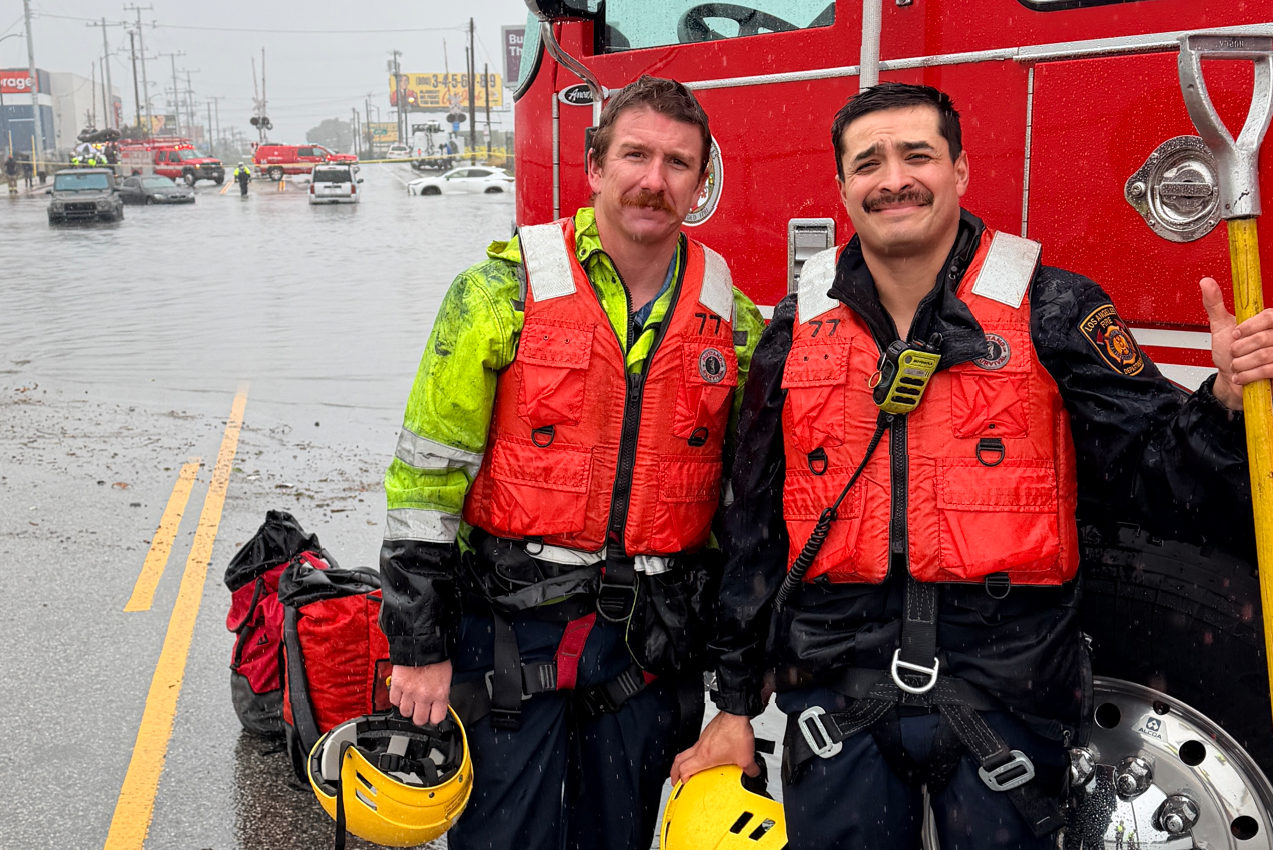
Storms like this one challenge LAFD Swiftwater members, highly trained across multiple disciplines, to be ready when complex rescue conditions arise
Photo: Adam Van Gerpen
***