LAFD Assists with Wildfires in Oregon and Washington
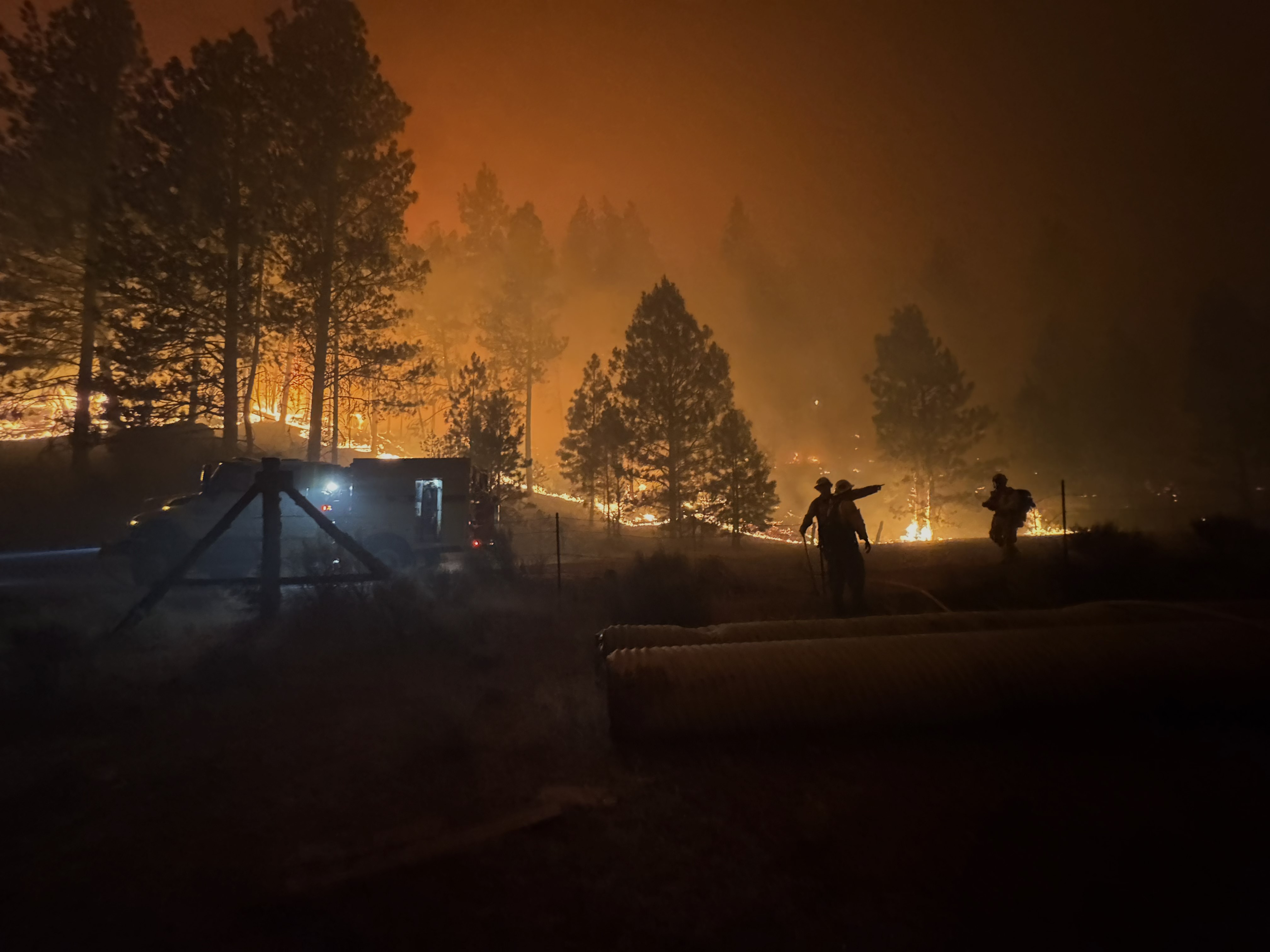
Right now, the Los Angeles Fire Departmet (LAFD) personnel are on the ground in Oregon and Washington, working alongside local crews as both states battle wildfires that have grown beyond what their own resources can manage. It's part of a larger wave of California support announced this week by Governor Newsom's office, and it's a role the LAFD has stepped into many times before.
How does a fire department in Los Angeles end up fighting fires in another state?
Nationally, wildfire resources are coordinated through the National Interagency Fire Center in Boise. The National Multi-Agency Coordinating Group (NMAC) evaluates fire activity across the country and determines where limited crews, engines, and command staff are needed most. The National Interagency Coordination Center (NICC) then fills those orders, moving people and equipment where they're needed. Life safety always comes first, followed by maintaining enough resources in reserve to respond to whatever fire starts next, then protecting property and communities. When the LAFD gets the call, it means someone at the national level looked at the entire picture and determined Oregon or Washington needed those resources more than somewhere else.
Not every interstate deployment comes through that federal system, though. Some happen through EMAC, the Emergency Management Assistance Compact, which allows states to request assistance directly from one another. That's how one of our task forces ended up in Oregon earlier this summer.
On July 16, two LAFD OES engines were dispatched in response to an EMAC request from Oregon as part of Task Force 1550, a mixed-agency team made up of members from Huntington Beach Fire, Orange County Fire Authority, Ventura Fire, Oxnard Fire, and the LAFD. The task force spent 14 days assigned to the Rowe Creek Complex Fire northeast of Redmond, working 12-hour night operational periods.
Throughout the assignment, the task force focused primarily on structure protection across multiple divisions, preparing homes and building containment lines under extreme and erratic fire behavior. During several operational periods, crews were also assigned firing operations, deliberately burning vegetation to strengthen containment lines and keep fire away from homes. That's not typical work for the LAFD on a wildland incident, and the assignment gave members an opportunity to gain experience with a skill set they don't often use.
One LAFD member who deployed with the task force put it this way:
"Despite the mixed agency companies, members worked seamlessly together carrying out our assigned tasks, showing a willingness and work ethic that was noticed and frequently mentioned during the entirety of the deployment. I believe we all walked away with an experience we won't soon forget, and a new appreciation for the firefighting community as a whole."
That cooperation is really the story behind every one of these deployments, whether it's a structure protection task force working a fire in Oregon or an Incident Management Team (IMT) helping manage a fire in Washington. Some of our personnel are serving in those IMT roles right now, handling the planning, logistics, safety, and public information responsibilities behind incidents that can stretch across tens of thousands of acres. Others are assigned as individual resources, including Rapid Extraction Module Support (REMS) personnel, who provide rescue and medical support for crews working directly on the fire line. LAFD's REMS personnel are serving alongside teams from Orange County, San Bernardino County, and Corona.
All of this is happening during a challenging period nationwide. The country moved to National Preparedness Level 5 on July 18th, the highest level on the scale, and has remained there ever since. At PL5, there is very little slack left in the national system, which makes it especially important that Los Angeles remains fully protected while our personnel help meet needs elsewhere. Every deployment is evaluated against that standard first: would it take anything away from this city, and could we still deliver the service Angelenos expect. If the answer to both is no and yes, we send the resource.
When Oregon and Washington or any other agency needs help, the LAFD is ready. That's the standard our members hold themselves to every time the call comes in.